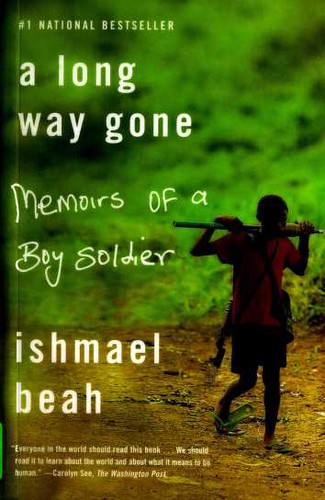
A boy of twelve in Sierra Leone is separated from his family when civil war reaches his village, and after months of wandering the countryside as a terrified refugee, he is swept up by the government army and turned into a child soldier, drugged, armed, and taught to kill, before he is eventually rescued and painstakingly rehabilitated, and this memoir recounts that descent into violence and the long, uncertain climb back toward humanity. Beah writes a spare, harrowing, ultimately hopeful firsthand account that bears witness to one of the modern world's most terrible phenomena, refusing both sensationalism and false comfort as he describes how an ordinary child became a killer and how, with extraordinary help, he found his way back to a life. The prose is plain and devastating, the testimony unforgettable. This suits readers who want a powerful, humane firsthand account of child soldiers, war, and recovery, and anyone seeking to understand the human cost of conflict through one survivor's eyes. It fits less well anyone wanting emotional distance or a light read, since the book is genuinely traumatic. The detail that an ordinary boy was transformed into a drugged child soldier and then slowly rehabilitated gives the memoir its harrowing arc. Harrowing, humane, and important, it rewards readers ready to bear witness. Content note: it depicts graphic war violence and the exploitation of a child, so sensitive readers should approach with real care, but its testimony is exactly what makes it so essential.