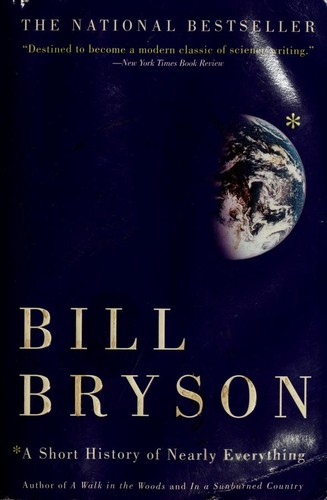
Setting out to understand how we know what we know about the universe, the Earth, and life itself, Bryson takes the reader on a tour of the great questions of science, how big the cosmos is, how the continents move, how life began, and the often eccentric, quarrelsome, and heroic people who worked the answers out. He writes as an enthusiastic amateur asking the questions a curious layperson would ask, which makes genuinely difficult science accessible and, more surprisingly, delightful, full of the human stories, the feuds, obsessions, and blunders, behind the discoveries. The prose is warm, funny, and clear, the pacing brisk, the mode narrative and anecdotal rather than systematic. What distinguishes it is the balance of real scientific content with genuine entertainment, and Bryson's gift for conveying the sheer strangeness and wonder of what science has learned. This is a book for readers who want to understand the big picture of science without a technical background, who enjoy history and biography woven into explanation, and who want to be entertained while they learn. Readers wanting depth in any single field, or the latest research, should treat it as a wonderful overview rather than a textbook; it is broad by design and now a couple of decades old. What makes it beloved is Bryson's infectious curiosity and his ability to make cosmology, geology, and biology feel like the greatest adventure story ever told. It leaves readers with a renewed sense of wonder at existence and at the improbable chain of events that produced them. A superb popular science book, and one of the best available introductions to how we came to understand our world.