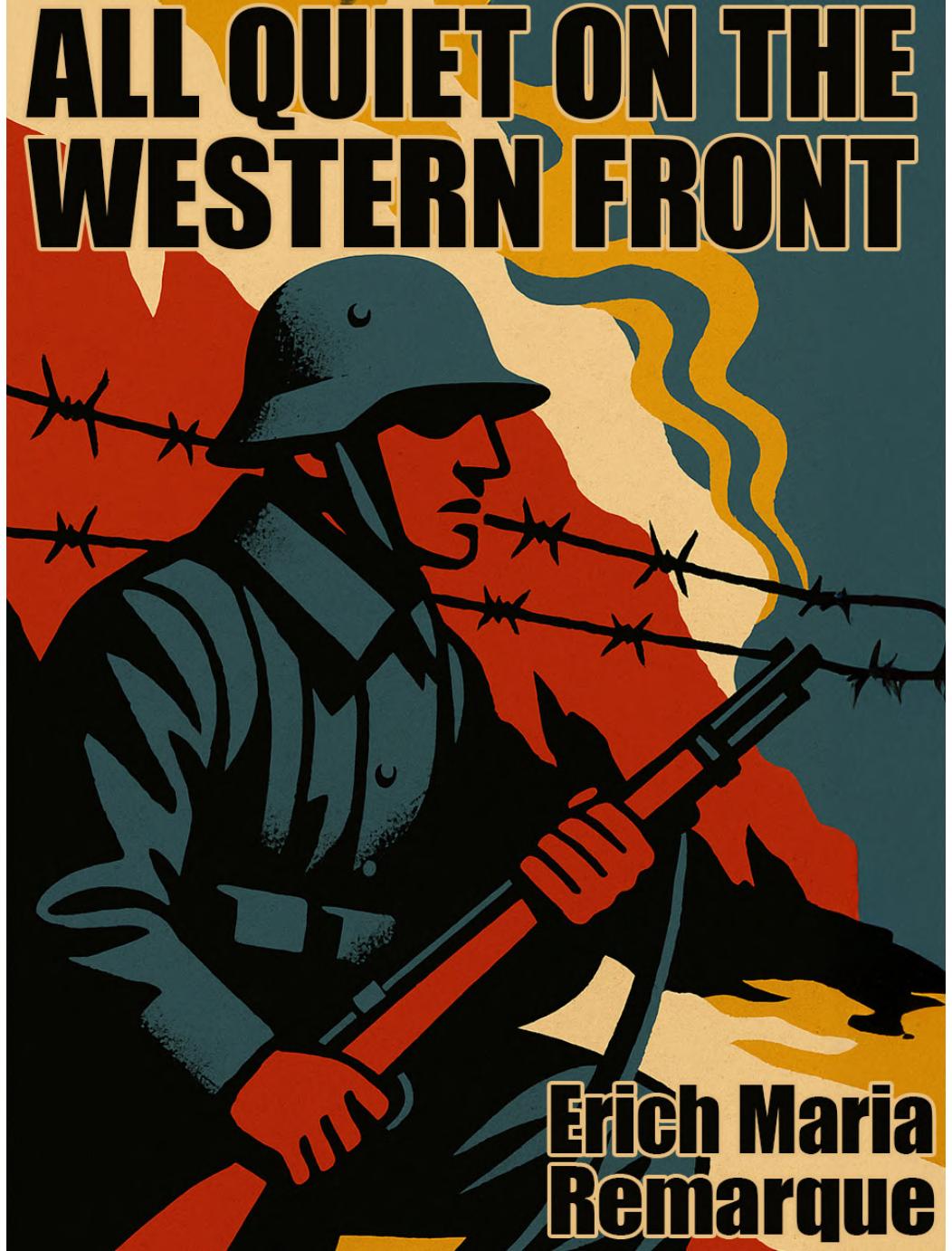
A young German soldier and his classmates, urged into the trenches of the First World War by a schoolmaster's patriotic speeches, discover the reality behind the rhetoric: mud, gas, artillery, and the systematic destruction of a generation. Remarque, who fought in the war himself, writes from inside the experience with a directness that strips away every abstraction of glory and honor, rendering combat as sensory horror and, between the battles, the strange numbness of men who have been aged and hollowed by what they've seen. The prose is plain and immediate, the pacing varied between the intensity of the fighting and the eerie quiet of the waiting, the tone one of exhausted grief rather than protest. What makes it the definitive war novel is its refusal of both heroism and easy despair, its focus on the ordinary soldier and the friendships that become the only thing worth anything in the wreckage. This is a book for readers who want the truth of war rendered without romance or ideology, who value witness over spectacle, and who can bear an unflinching account of a generation's destruction. Readers wanting heroism, victory, or hope should understand the book offers none; its power is precisely its honesty about waste. The famous final pages, quiet and devastating, deliver the war's indifference in a single stroke. Banned and burned by the Nazis for exactly the truth it tells, it remains the essential novel of the First World War and one of the most powerful anti-war statements ever written, a book that made the phrase of its title synonymous with the erasure of the individual in the machinery of mass slaughter.