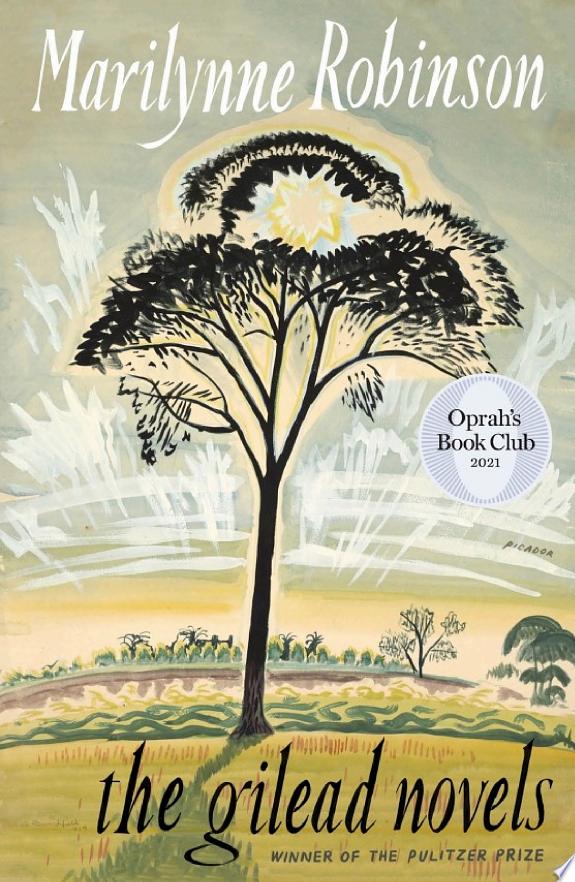
Gilead
An ageing pastor in rural Iowa writes a letter to his young son -- a life's worth of memory, regret, and hard-won grace.
Mood Thought-Provoking
Pacing Slow Burn
Complexity Dense & Rewarding
Pages 1184
Reading Time
~39–59 hrs
An ageing pastor in rural Iowa writes a letter to his young son -- a life's worth of memory, regret, and hard-won grace.
About This Book
An elderly, ailing minister in a small Iowa town, knowing his heart will soon give out, writes a long letter to the young son he will not live to see grow up, gathering together family history, hard-won wisdom, confessions, and the day-to-day wonder of ordinary life so that the boy will one day know the father he barely got to have. Robinson writes a luminous, contemplative novel in the preacher's gentle, searching voice, moving through his memories of a fierce abolitionist grandfather and a pacifist father, his late and unexpected marriage, and his troubled feelings toward a wayward godson whose return stirs old griefs, all suffused with a deep, questioning Christian faith and an attentiveness to grace in small things. The book has almost no plot in the conventional sense; its beauty lies in its language, its moral seriousness, and its radiant appreciation of existence. This suits readers who want quiet, profound literary fiction about faith, mortality, forgiveness, and the sacredness of ordinary life, and who savor contemplative prose. It fits less well anyone wanting narrative momentum or incident, since the book is a reflective, largely internal meditation. The detail that the entire novel is a dying father's letter to a small son, an attempt to hand down a life's understanding to a child he won't see grown, gives it its tender and moving frame. Luminous, wise, and deeply felt, it rewards patient, reflective readers. Those wanting plot may find it still, but its radiant meditation on grace and mortality is exactly what makes it so treasured.
Who This Is For
Best for readers who want their assumptions challenged: books that raise questions without easy answers. This is a book that asks something of you. Dense, layered, and best read slowly. It takes its time, and that's the point. Patience is rewarded. If you want clear answers and a satisfying resolution, look elsewhere.
Best Read When
Best read when you're in the mood for something challenging and thought-provoking, and a read that's slow and deeply immersive.
What It Explores
Gilead explores family in all its complexity — inherited and chosen, identity and the gap between who we are and who we pretend to be, loss and what remains after it, and redemption — whether it is earned, possible, or ever truly complete.
Readers Who Liked This Also Loved
Personalised Recommendations
Answer six questions about how you like to read. No email, no account. Free always.
Find My Next Book →