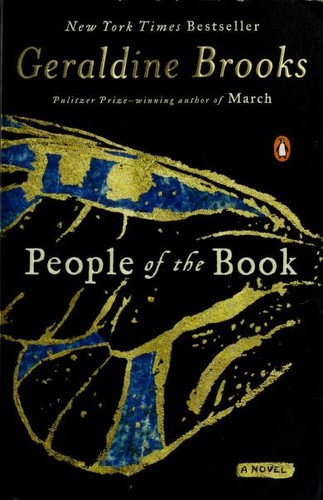
A rare-book conservator is flown to Sarajevo to examine and stabilize a famous illuminated Hebrew manuscript that survived the war, and the tiny physical traces she finds in its binding, an insect wing, a wine stain, a white hair, a crystal of salt, become doorways into the centuries the book has lived through. Brooks structures the novel as a series of leaps backward in time, each artifact launching a chapter set in a different era and city, from wartime Bosnia to Vienna, Venice, and Inquisition Spain, tracing the hands that made, hid, and rescued the volume. The present-day thread follows the conservator's own prickly personal life and a mystery about the manuscript's provenance, while the historical chapters imagine the people behind each stain and repair. This suits readers who love history braided into fiction, the craft of bookmaking, and stories about objects that outlast the people who cherish them. It fits less well anyone wanting a single continuous plot, since the structure fragments deliberately across time. The conceit that a book's damage is also its biography, that every flaw records a moment of danger or love, gives the novel its distinctive emotional logic. Inspired by the real survival of a celebrated Haggadah, it reaches for a theme of coexistence and shared human labor across faiths and centuries. Rich, well-researched, and cleverly built, it rewards readers who like their fiction to teach as it moves, though those wanting momentum in a single timeline may find the jumps demanding.