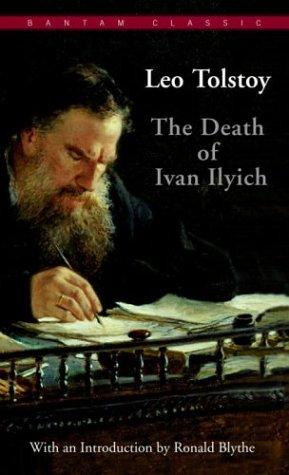
The Death of Ivan Ilyich
A judge dies slowly of a minor injury and spends his final weeks confronting the fact that he has never actually lived.
Mood Thought-Provoking
Pacing Fast-Paced
Complexity Moderately Complex
A judge dies slowly of a minor injury and spends his final weeks confronting the fact that he has never actually lived.
About This Book
A successful, respectable judge who has arranged his entire life around propriety and advancement falls ill from a minor injury that will not heal, and as his body fails he is forced to ask the question he has always avoided: whether the correct, comfortable life he built was ever truly lived at all. Tolstoy compresses an entire moral reckoning into a short novella, opening at the funeral and then circling back to trace how an ordinary man of ambition and good taste arrives at a lonely, terrifying death. The power lies in the unsparing honesty about dying, the way friends and family maintain polite fictions, the way the sick man craves pity and truth from anyone willing to give it, and the small mercy he finds in a plain-spoken servant who does not pretend. This suits readers who want literature that confronts mortality directly and philosophically, and anyone drawn to a compact classic that delivers enormous weight in few pages. It fits less well those wanting plot or escape, since the subject is unflinching and the mood somber. The detail that only the peasant Gerasim treats the dying man with simple, unembarrassed kindness, holding his legs up through the night, becomes the book's quiet moral center. Brief, devastating, and impossible to shake, it rewards readers willing to sit with hard questions about how a life should be spent. Those seeking comfort or distraction should know it offers a mirror rather than an escape, which is precisely its enduring purpose and its unsettling gift.
Who This Is For
Best for readers who want their assumptions challenged: books that raise questions without easy answers. The writing rewards attention without being demanding, a good balance of depth and readability. It moves quickly: once you're in, it's hard to stop. If you want clear answers and a satisfying resolution, look elsewhere.
Best Read When
Best read when you're in the mood for something challenging and thought-provoking, and a read that's fast and propulsive.
What It Explores
The Death of Ivan Ilyich explores identity and the gap between who we are and who we pretend to be, loss and what remains after it, and redemption — whether it is earned, possible, or ever truly complete.
Readers Who Liked This Also Loved
Personalised Recommendations
Answer six questions about how you like to read. No email, no account. Free always.
Find My Next Book →