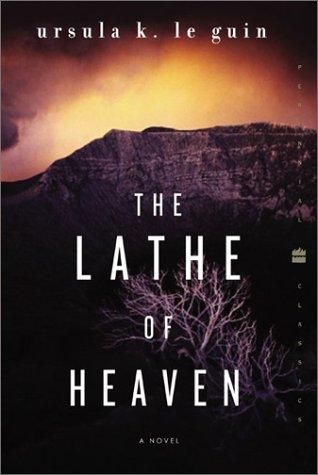
The Lathe of Heaven
A man whose dreams alter reality comes under the control of a therapist who sees the therapeutic -- and political -- possibilities of that ability.
Mood Thought-Provoking
Pacing Balanced
Complexity Moderately Complex
A man whose dreams alter reality comes under the control of a therapist who sees the therapeutic -- and political -- possibilities of that ability.
About This Book
A mild, frightened man discovers that some of his dreams reshape reality retroactively, so that when he wakes the world has always been different, and no one but him remembers how it used to be. Desperate to stop, he ends up in the care of a psychiatrist who quickly grasps the power at his disposal and decides to use his patient's sleeping mind to fix the world, with escalating and disastrous results. Le Guin builds a quiet, philosophical science fiction novel around a simple engine: every attempt to improve reality by force introduces a new horror, so ending overpopulation brings a plague, and ending war brings an alien threat. The book is steeped in Taoist thought, contrasting the doctor's compulsion to act and control with the dreamer's instinct to accept and not interfere, and that tension is its real subject. This suits readers who like ideas-driven science fiction, moral seriousness, and a short novel that thinks hard about power and unintended consequences. It fits less well anyone wanting spectacle or a fast plot, since the drama is largely interior and conceptual. The gray, drizzling near-future Portland where it unfolds keeps mutating around the characters, and each new version feels both plausible and quietly wrong. Compact, wise, and unnerving, it reads like a parable about the arrogance of trying to engineer paradise. Anyone who values restraint and philosophical weight over action will find it rewarding, while readers craving momentum may find its pace deliberately slow.
Who This Is For
Best for readers who want their assumptions challenged: books that raise questions without easy answers. The writing rewards attention without being demanding, a good balance of depth and readability. The pacing is balanced, time to breathe between moments that matter. If you want clear answers and a satisfying resolution, look elsewhere.
Best Read When
Best read when you're in the mood for something challenging and thought-provoking, and a read that's balanced and absorbing.
What It Explores
The Lathe of Heaven explores identity and the gap between who we are and who we pretend to be, power and ambition and what they cost the people who pursue them, and survival and what extreme circumstances ask of people.
Readers Who Liked This Also Loved
Personalised Recommendations
Answer six questions about how you like to read. No email, no account. Free always.
Find My Next Book →