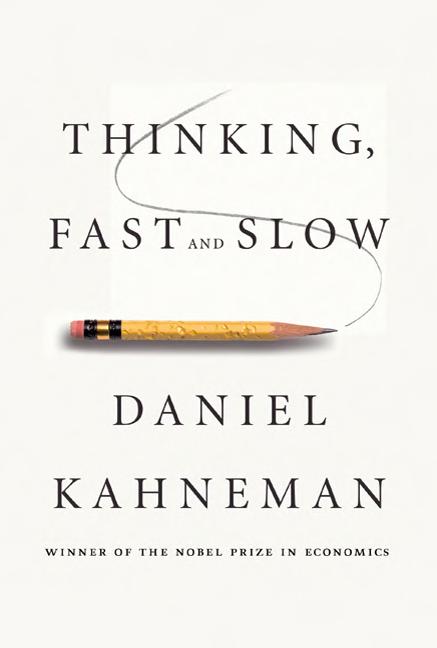
A lifetime of research into how people actually make decisions is distilled here into one central idea: the mind runs on two systems, a fast, intuitive, effortless one that jumps to conclusions, and a slow, deliberate, lazy one that we like to think is in charge but usually is not. Kahneman, who spent decades studying judgment with his longtime collaborator, walks the reader through experiment after experiment showing how the fast system misleads us through predictable biases, anchoring on random numbers, overweighting vivid risks, and inventing coherent stories from too little evidence. The book is dense and demanding, closer to a graduate education than a breezy popular read, and it asks you to catch your own mind in the act of error again and again. What makes it distinctive is that it does not just list biases but builds a unified account of two thinking styles and shows how they trade off. This suits readers who want the serious source behind a generation of popular psychology, and anyone willing to work for a genuinely changed view of their own reasoning. It fits less well those wanting quick, actionable tips, since Kahneman is honest that knowing about biases barely protects you from them. The famous demonstration of loss aversion, that losing money hurts about twice as much as gaining the same amount pleases, captures the whole enterprise in one asymmetry. Rigorous, humbling, and occasionally heavy going, it rewards patient readers. Those hoping for a light self-help skim will find it slow and detailed, which is exactly its value.