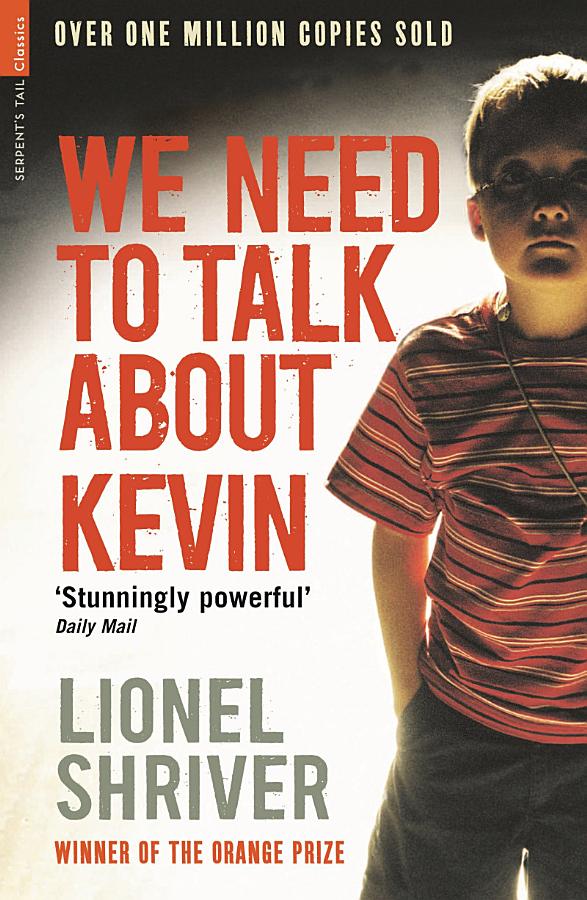
We Need to Talk About Kevin
A mother writes letters to her estranged husband trying to understand how their son became the perpetrator of a school massacre.
Mood Dark & Gritty
Pacing Slow Burn
Complexity Dense & Rewarding
A mother writes letters to her estranged husband trying to understand how their son became the perpetrator of a school massacre.
About This Book
Told entirely through letters a mother writes to her estranged husband after their son commits a school massacre, this is a novel about maternal ambivalence pushed to its most unbearable extreme. Eva never wanted to be a mother, felt no bond with Kevin from birth, and spends the letters trying to work out whether her failure to love him made him what he became, or whether he was always going to be this, or whether the question itself is a way of avoiding a worse truth. Shriver refuses every consolation: she won't explain Kevin, won't excuse Eva, and won't tell the reader how much of Eva's account to trust, since Eva is narrating her own case to the one person who might absolve her. The prose is dense, precise, and mercilessly intelligent, the letters circling the central horror with the compulsive return of someone who cannot stop picking at a wound. This is a slow, demanding literary novel, and its pacing reflects the retrospective, obsessive structure rather than any thriller momentum, though the dread accumulates relentlessly. It's a book for readers who want fiction that goes to genuinely uncomfortable places about parenthood, nature versus nurture, and the limits of love, and who can tolerate a narrator they may not like about a subject that offers no relief. Readers seeking comfort, likeable characters, or resolution should stay away; this is one of the bleakest major novels of its era, and deliberately so. The final letter contains a revelation that recolors everything, and the book's refusal to let anyone, mother or son or reader, off the hook is exactly what makes it impossible to forget.
Who This Is For
Best for readers who want something unflinching: morally complex, heavy, and honest about the worst of things. This is a book that asks something of you. Dense, layered, and best read slowly. It takes its time, and that's the point. Patience is rewarded. Not the right choice if you're after something comforting or redemptive.
Best Read When
Best read when you're in the mood for something dark and uncompromising, and a read that's slow and deeply immersive.
What It Explores
We Need to Talk About Kevin explores family in all its complexity — inherited and chosen, identity and the gap between who we are and who we pretend to be, and loss and what remains after it.
Readers Who Liked This Also Loved
Personalised Recommendations
Answer six questions about how you like to read. No email, no account. Free always.
Find My Next Book →