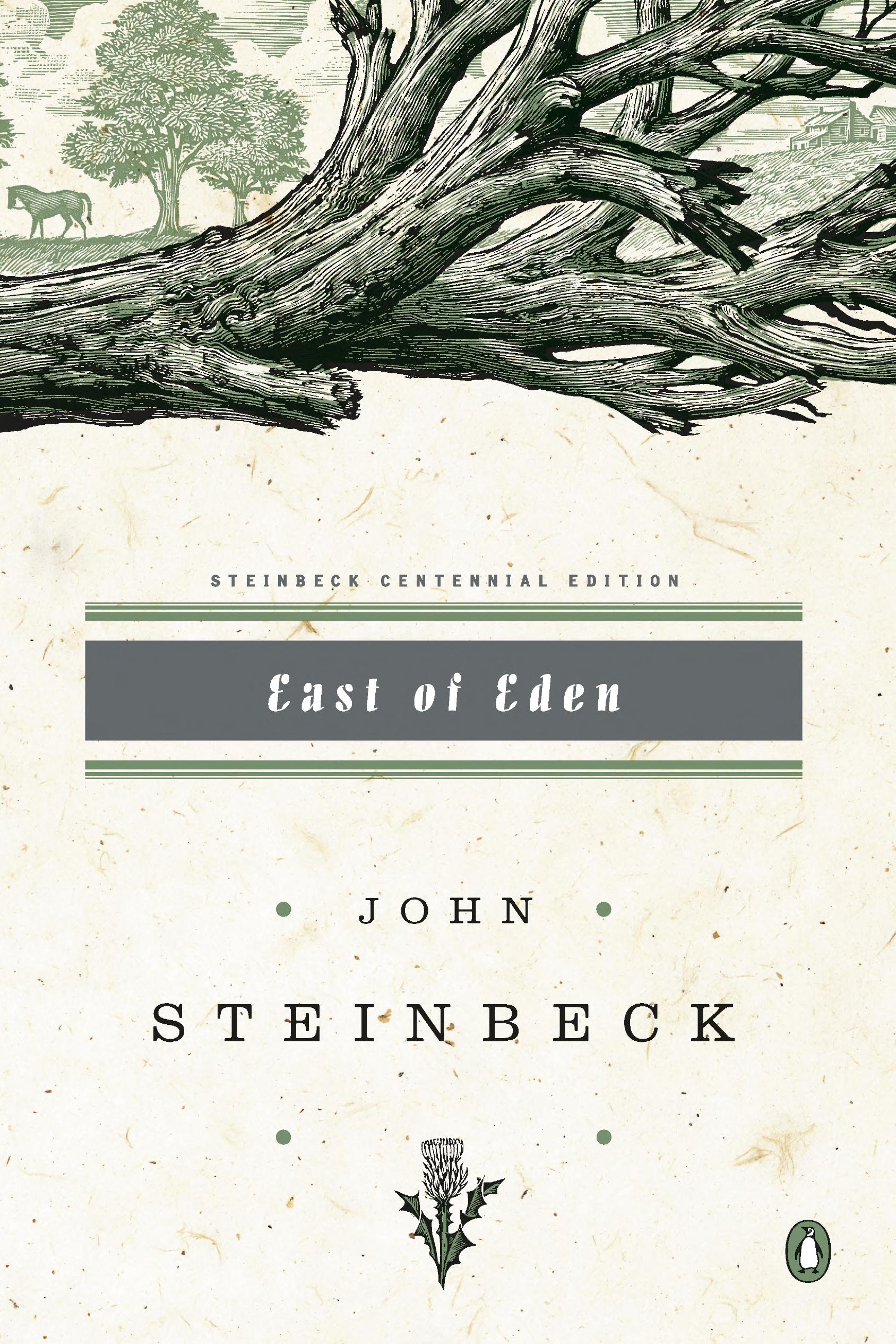
East of Eden
Two families in California's Salinas Valley play out an epic struggle between good and evil across multiple generations -- and one word, timshel, changes everything.
Mood Emotional
Pacing Slow Burn
Complexity Dense & Rewarding
Two families in California's Salinas Valley play out an epic struggle between good and evil across multiple generations -- and one word, timshel, changes everything.
About This Book
Two families in California's Salinas Valley, the restless Trasks and the author's own Hamilton forebears, live out variations on the ancient story of two brothers, one favored and one cast down, across generations shadowed by a mother of almost pure malevolence and by the question of whether a person is doomed by inheritance or free to choose their own goodness. Steinbeck called this the book he had been preparing his whole life to write, and it is his most expansive, folding family saga, biblical retelling, and philosophical meditation into a sweeping story of love, rejection, and the possibility of redemption. At its heart lies a single Hebrew word, unpacked at length by a wise servant, that reframes the Cain and Abel story as a matter not of fate but of moral freedom, of every person's power to master sin rather than be ruled by it. This suits readers who want a rich, ambitious American epic with unforgettable characters and a serious moral core, and who enjoy a long, character-driven saga. It fits less well anyone wanting a tight plot or brisk pace, since the book is long and often pauses to reflect. The detail that the entire novel turns on the meaning of one translated word, argued to signify not a command or a promise but a choice, gives it its luminous central idea. Grand, wise, and deeply moving, it rewards patient readers enormously. Those wanting economy may find it sprawling, but its meditation on whether we are free to be good is exactly what makes it endure.
Who This Is For
Best for readers who want to feel something deeply, books that stay with you long after the last page. This is a book that asks something of you. Dense, layered, and best read slowly. It takes its time, and that's the point. Patience is rewarded. If you prefer to read at arm's length, this one may get too close.
Best Read When
Best read when you're in the mood for something moving and emotionally resonant, and a read that's slow and deeply immersive.
What It Explores
East of Eden explores family in all its complexity — inherited and chosen, identity and the gap between who we are and who we pretend to be, redemption — whether it is earned, possible, or ever truly complete, and love in its most complicated forms.
Readers Who Liked This Also Loved
Personalised Recommendations
Answer six questions about how you like to read. No email, no account. Free always.
Find My Next Book →