6 Books Like Norwegian Wood for the Emotionally Precise
Norwegian Wood's specific register -- quiet grief, erotic melancholy, the weight of early loss on a whole life -- is rarer than it looks. These books share its commitment to devastation without announcement.
May 2026 · 7 min read · The Pagesmith
Norwegian Wood occupies a specific emotional register that most fiction avoids because it is difficult to sustain: quiet, intimate, and consistently devastating without being dramatic about it. Murakami does not build to a climax or resolve his grief into something usable. The losses in the novel stay losses. The specific quality of Toru’s memory — the way it is simultaneously precise and inadequate, the way it knows what it lost without being able to recover it — is produced by Murakami’s restraint as much as by his subject matter. If you are looking for books like Norwegian Wood, the surface features are less important than the emotional method: books that stay close to a consciousness processing something it cannot fully articulate, in a prose register that values precision over expressiveness and whose effects accumulate rather than arrive.
What Norwegian Wood Does That Most Emotional Fiction Does Not
Most literary fiction that deals with grief or loss reaches for catharsis — a scene, a realization, a resolution that releases the pressure the narrative has built. Norwegian Wood does not. Toru at the novel’s end has not resolved anything. He has only reached the specific understanding that some things cannot be resolved, and that this understanding does not help. That structural refusal is what makes the novel last. The books here share versions of it: they do not offer catharsis as a trade for the reader’s investment, and they trust the reader to stay with an emotional experience that does not convert to meaning on schedule. They are also, in different ways, formally precise — the restraint is structural, not just tonal.
Norwegian Wood earns its grief by refusing to make it useful. The best books in this register do the same: they stay with the feeling rather than explaining what it is for.
The Books
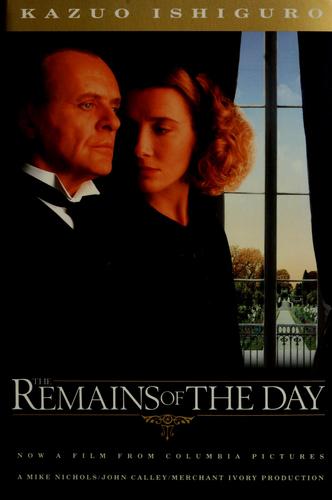
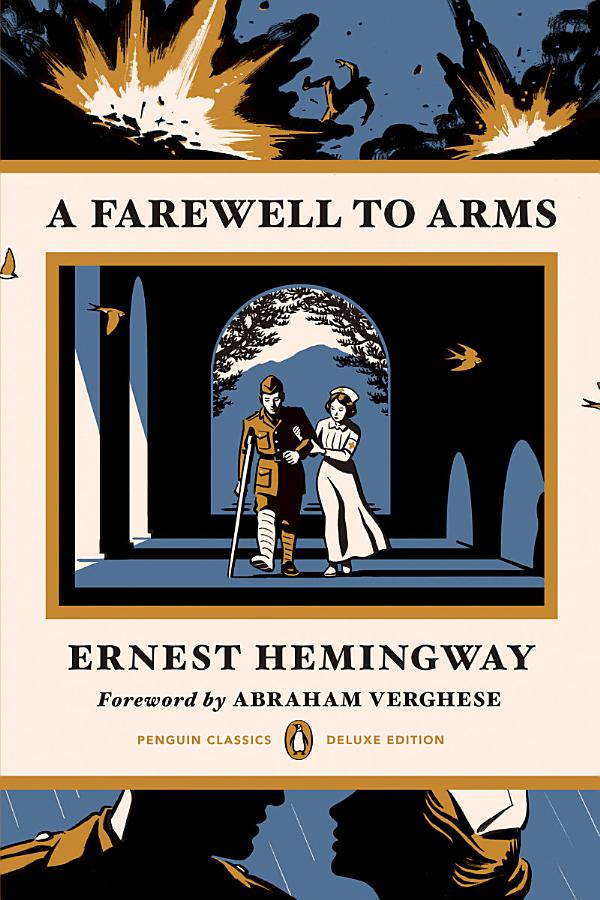
The Remains of the DayKazuo IshiguroThe most structurally similar book to Norwegian Wood on this list. Stevens’s formal, controlled narration is the same instrument Murakami uses in a different key: a consciousness processing a loss it has never allowed itself to name, in a prose register so restrained that the reader arrives at the feeling independently rather than being delivered to it. Both novels are structured around memory and retrospection, both use a journey as the framework for that retrospection, and both end without catharsis — with only the full understanding of what was lost, which is not the same thing as comfort. Never Let Me GoKazuo IshiguroIshiguro’s second entry on this list operates in the same restrained register as The Remains of the Day but reaches its emotional devastation through a different structural mechanism. Kathy’s narration is gentle, unhurried, and specific about the details of a childhood and young adulthood that the reader gradually understands was designed to end in a particular way. Like Norwegian Wood, it is a novel about young people and early loss, told in retrospect by a narrator whose equanimity in the face of what they are describing is the novel’s most disturbing quality. The science fiction premise is incidental; the emotional register is pure Ishiguro, and very close to Murakami. Giovanni’s RoomJames BaldwinThe erotic melancholy of Norwegian Wood finds its closest equivalent in Baldwin’s short, devastating novel. David’s account of his love for Giovanni — the love he was not willing to acknowledge and therefore destroyed — has the same quality as Toru’s memory of Naoko: precise, inadequate, and carrying the full weight of what was refused rather than what was lost. Baldwin’s prose is warmer than Murakami’s but no less exact, and the grief is the same kind: not for a person but for a version of the self that would have been possible if a different choice had been made. A Farewell to ArmsErnest HemingwayThe structural similarity is not obvious but real. Hemingway’s love story in wartime Italy is told in a prose register so controlled and emotionally withholding that the devastation of its ending arrives with the full weight of 300 pages of restraint behind it. Norwegian Wood’s Toru and Hemingway’s Frederic Henry are both young men in love with women they cannot save, narrating from a retrospective distance that the text makes present without explaining. Both novels refuse the consolation of meaning: what happened, happened, and the surviving narrator is left with only the memory of it, which is not enough. Love in the Time of CholeraGabriel Garcia MarquezThe counterintuitive choice, included because it shares Norwegian Wood’s most specific quality: love rendered as a form of grief. Florentino’s fifty-year devotion is not romantic in any comfortable sense — it is obsessive, consuming, and structured by an absence that became the organizing principle of a life. Garcia Marquez’s prose is warmer and more ornate than Murakami’s, but both novels are ultimately about what loss does to the people it does not destroy outright, and both take seriously the possibility that some feelings do not diminish with time but only become more thoroughly themselves. The Bell JarSylvia PlathPlath’s novel shares Norwegian Wood’s specific demographic — young people in the process of discovering that adulthood is not what they expected — and its unwillingness to sentimentalize depression or offer false resolution. Esther Greenwood’s breakdown and recovery are rendered in a voice that is precise, wry, and strangely detached, and the novel’s emotional impact comes from that detachment rather than from expressiveness. Like Murakami, Plath trusts the specificity of observation over the declaration of feeling, and the cumulative effect is more devastating than anything more directly emotional could be. Who This Is For
Readers who found Norwegian Wood devastating in a way they found hard to explain to people who hadn’t read it, and who want books that produce a similar effect through similar means: restraint, precision, retrospection, and a refusal to make grief useful. Not readers who want something more consoling — these books do not offer catharsis. The literary fiction catalogue has more in this direction for readers who want to continue exploring this register.
Frequently Asked Questions
Q: Is Norwegian Wood the saddest Murakami novel?
A: It is the most directly emotional. Other Murakami novels are more disorienting or more complex, but Norwegian Wood is the one readers most consistently describe as having made them cry, because it is the most linear and the least insulated by surrealism. The Wind-Up Bird Chronicle is more ambitious; Norwegian Wood is more honest.
Q: What should I read after Norwegian Wood if I want more Murakami?
A: Kafka on the Shore is the next natural step for readers who want the surreal Murakami after experiencing the direct one. South of the Border, West of the Sun is a short novel with the same emotional register as Norwegian Wood, more concentrated and arguably more devastating.
Q: Why is Never Let Me Go on a Norwegian Wood list?
A: Both novels are structured around young people losing each other in ways that cannot be prevented, told in retrospect by narrators whose equanimity is the most disturbing thing about them. The science fiction element of Ishiguro’s novel is incidental — its emotional architecture is closer to Norwegian Wood than to any other science fiction.
Q: Are all these books sad?
A: They are all emotionally serious rather than sad in any simple sense. Giovanni’s Room and A Farewell to Arms have conventionally devastating endings. The Remains of the Day and Never Let Me Go are devastatingly quiet rather than overtly tragic. The Bell Jar ends with partial recovery rather than catastrophe. What they share is a refusal to convert difficulty into something usable.
Not sure which of these is right for you specifically? The Pagesmith quiz matches you to books based on your mood, pacing preference, and reading goals, not bestseller lists. Takes two minutes.