Books Like The Handmaid's Tale That Take the Warning Seriously
The Handmaid's Tale is specifically about reproductive control and religious authority as mechanisms of political power. These books share its concern with how states regulate bodies and what resistance looks like when the most personal things become instruments of the state.
May 2026 · 8 min read · The Pagesmith
The Handmaid’s Tale is a warning novel, but warnings require specificity to be effective, and Atwood’s is very specific. Gilead works as a horror not because it is unimaginably extreme but because Atwood builds it from mechanisms that already exist or have existed: the specific rhetoric of religious patriarchy, the historical precedents for state control of reproduction, the ordinary institutional processes by which dissent is identified and eliminated. The horror is the plausibility. The books here share that specific approach: dystopian or speculative fiction that uses its premises not for entertainment but as a way of making visible something about existing power structures that familiar realism cannot access. Several of them were written before The Handmaid’s Tale and influenced it; several were written after and extend its argument in different directions. All of them take the question of who controls bodies — and why — with the seriousness the subject requires.
What Sets Serious Dystopian Fiction Apart from the Genre
Most dystopian fiction uses its imagined future as backdrop for adventure or romance, and the oppressive society is primarily a source of dramatic obstacles. The books here are doing something different: they use the speculative premise to make an argument about specific mechanisms of power that are present in the world and visible in the imagined one. Orwell’s Oceania is a specific argument about how totalitarian language works to make dissent unthinkable. Le Guin’s Gethen is a specific argument about what gender is and what it would mean to live without it as an organizing category. These premises are not arbitrary world-building choices; they are the argument. The speculative element is the analytical tool.
The best dystopian fiction is not about an imagined future. It is about the present, made legible through the amplification of mechanisms that already operate but that familiarity has made invisible.
The Books
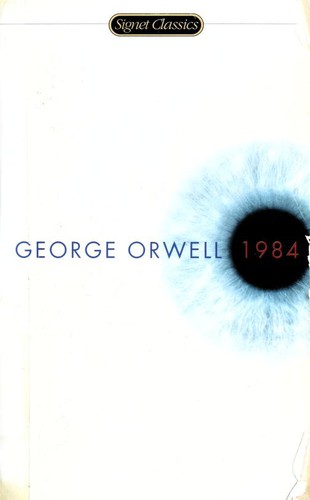
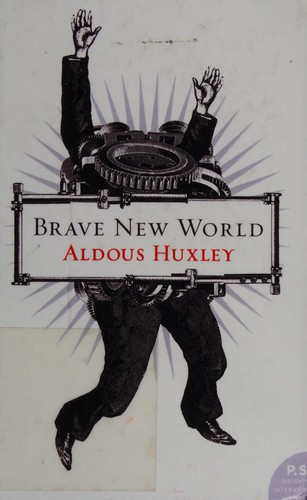
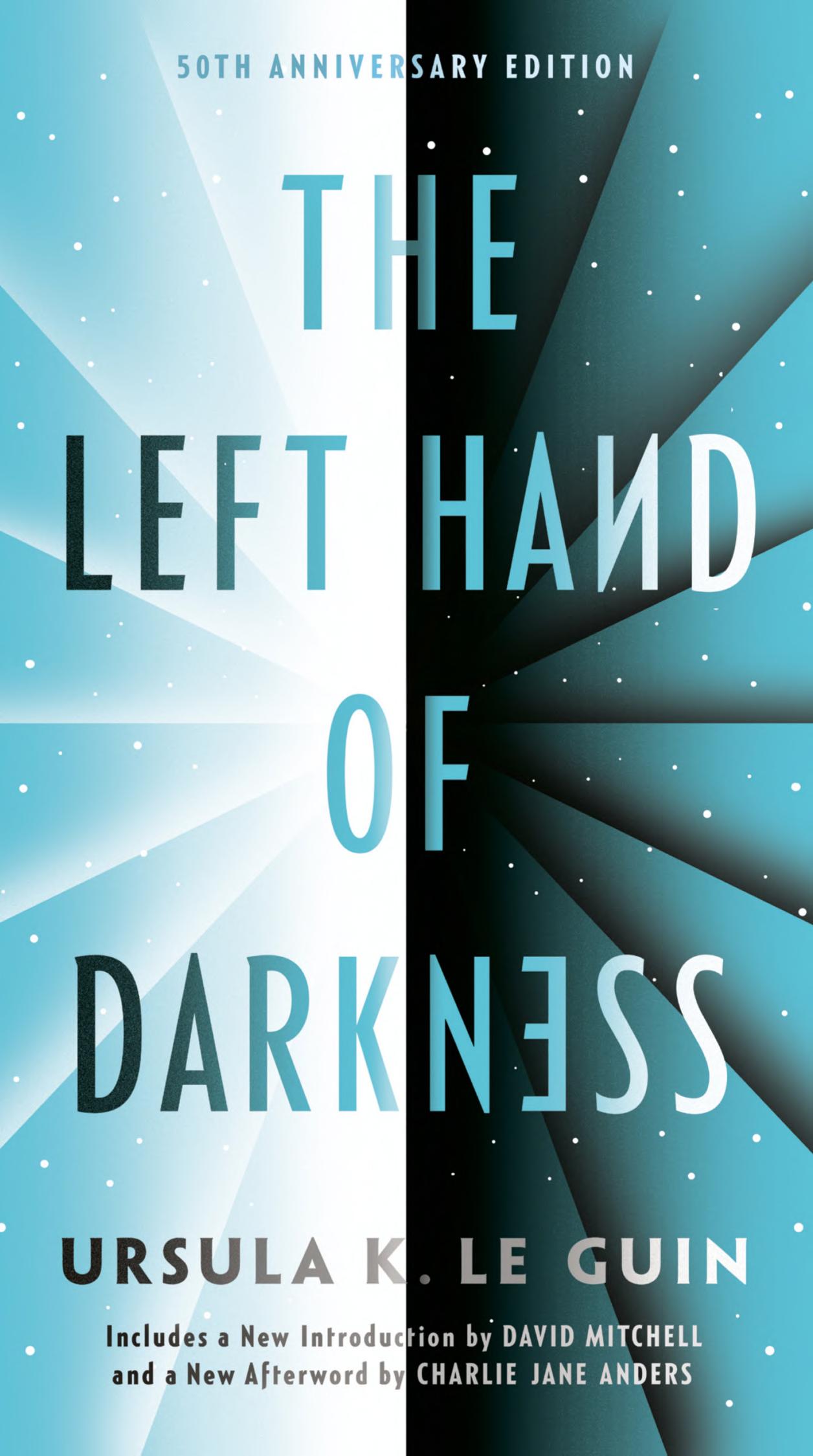
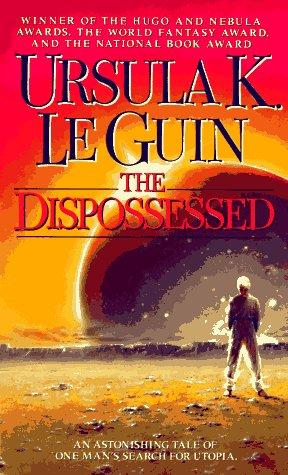
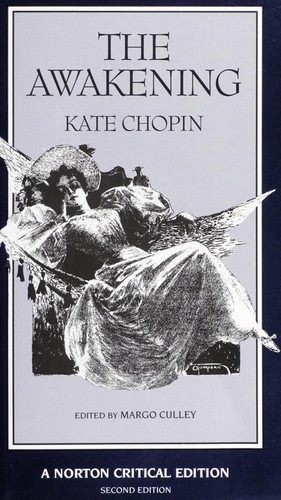
1984George OrwellOrwell’s novel and Atwood’s share the same essential argument about how authoritarian systems sustain themselves: not primarily through violence (which is expensive and creates martyrs) but through the manipulation of language and consciousness. Winston Smith’s doublethink and Offred’s carefully managed interiority are the same mechanism: a person who has learned to maintain two irreconcilable beliefs simultaneously because the alternative is destruction. Orwell is more interested in the macro-architecture of totalitarianism — the Party, the Ministry of Truth, the telescreens — where Atwood is more interested in the texture of daily life under it. Together they provide the most complete picture in fiction of how ordinary human consciousness survives inside systems designed to eliminate it. Brave New WorldAldous HuxleyHuxley’s dystopia approaches reproductive control from the opposite direction of Atwood’s: where Gilead uses reproduction as a mechanism of subjugation through restriction and force, the World State uses it as a mechanism of control through complete industrialization. Every human being is manufactured to specification in a laboratory, conditioned from birth to desire exactly what their social position requires them to desire, and sustained in that condition by pharmaceutical pleasure. Huxley’s argument — that a society that gives people everything they want is as totalizing as one that denies them everything they need — is more disturbing than Orwell’s in some ways because the oppression is invisible from inside it. The soma-happy citizens of the World State are not suffering; they are simply not free, and they have no framework for recognizing the difference. The Left Hand of DarknessUrsula K. Le GuinLe Guin’s novel makes the argument that is implicit in The Handmaid’s Tale explicit: that gender is a social construction rather than a biological fact, and that the social structures built around it are therefore contingent rather than inevitable. The people of Gethen are neither male nor female except during a brief monthly period of fertility, and an Envoy from a gendered society trying to understand Gethen’s politics becomes, in effect, a study of all the assumptions about human nature that gender has produced. Le Guin is not arguing for androgyny as a solution; she is arguing that a world organized around gender would look very different from the outside, and that the differences reveal how much of what we take as human nature is actually the product of a specific social arrangement. Never Let Me GoKazuo IshiguroIshiguro’s novel shares The Handmaid’s Tale’s most disturbing quality: the protagonist’s acceptance of a system that is using her body for the benefit of others, rendered from the inside with a calm that is more horrifying than rebellion would be. Where Offred’s compliance is strategic — she maintains an inner resistance — Kathy’s is something more complete: a person who has been so thoroughly conditioned to accept her role that she cannot fully formulate the alternative. The novel’s argument about how social conditioning works at a level below conscious resistance is the darkest version of the dystopian argument available: not that the state is wrong about what it is doing, but that it can be right about the system and still be using people who deserved better. The DispossessedUrsula K. Le GuinLe Guin’s second entry on this list approaches the question from the other direction: not a dystopia but an ambiguous utopia, a society organized around anarchist principles that has avoided the hierarchies of Gilead or Oceania but has its own mechanisms of social conformity. Shevek, a physicist from the anarchist moon Anarres, visits the capitalist planet Urras and discovers that both societies have found ways to constrain the individual freedom they claim to value. Le Guin’s argument — that no social system is free of the will to control, and that the question is always which freedoms are being suppressed for whose benefit — is the most politically sophisticated on this list and the one that most directly refuses the comfort of any simple alternative to what Atwood describes. The AwakeningKate ChopinThe historical counterpart that clarifies how old the feminist argument in The Handmaid’s Tale actually is. Chopin published The Awakening in 1899, and the social systems that constrain Edna Pontellier — her legal status as her husband’s property, the institution of motherhood as woman’s defining obligation, the economic impossibility of independence — are not Gilead’s explicit theocracy but their Gilded Age antecedents. Atwood’s genius was to show what those systems look like when made explicit and systematic; Chopin shows what they looked like when they were simply the social furniture that everyone accepted as natural. Reading The Awakening alongside The Handmaid’s Tale reveals that Gilead is not a future but a description of what the past was for women who noticed it. Who This Is For
Readers who finished The Handmaid’s Tale understanding why Atwood included the historical note — the insistence that everything in Gilead has a historical precedent — and who want fiction that engages the same question about political control of the body with the same level of seriousness. Also readers who want to understand the tradition of feminist speculative fiction that Atwood is working within and responding to. The sci-fi and literary fiction catalogues have more in this territory.
Frequently Asked Questions
Q: Is The Handmaid’s Tale science fiction?
A: Atwood has called it speculative fiction rather than science fiction, on the grounds that it contains no technologies that did not already exist at the time of writing. The distinction matters for the argument: the horror of Gilead is that it requires nothing technologically new, only a specific arrangement of existing social and political mechanisms. Orwell and Huxley are in the same category — their dystopias are arguments about existing tendencies taken to logical extremes, not predictions about future technology.
Q: What is the best feminist dystopia after The Handmaid’s Tale?
A: The Left Hand of Darkness and The Dispossessed are both Le Guin novels that make more sophisticated political arguments, though neither is a dystopia in the conventional sense. Brave New World is the most direct complement to The Handmaid’s Tale as a reproductive-control dystopia. Never Let Me Go applies the body-as-state-property argument in the most psychologically intimate way.
Q: Is 1984 still relevant?
A: The specific totalitarian architecture Orwell describes — the Party, the telescreens, the Ministry of Truth — is less relevant to contemporary Western democratic societies than it was to the Soviet state he was analyzing. What remains completely relevant is his analysis of how language is used to make certain thoughts impossible, and his concept of doublethink as a description of how people sustain contradictory beliefs under social pressure. These mechanisms are not confined to totalitarian states.
Q: What should I read after The Dispossessed if I want more Le Guin?
A: The Left Hand of Darkness is Le Guin at her most focused on gender as a social construction. The Word for World Is Forest is shorter and more directly political — a novella about colonialism and indigenous resistance that reads as a Vietnam War allegory. The Tombs of Atuan, the second book of the Earthsea series, addresses female coming-of-age and religious authority in a fantasy register.
Not sure which of these is right for you specifically? The Pagesmith quiz matches you to books based on your mood, pacing preference, and reading goals, not bestseller lists. Takes two minutes.