What to Read When You Want Something Beautiful and Sad
Beautiful-and-sad is a specific emotional register -- distinct from tragedy, which is operatic, and from melancholy, which is passive. These books produce it through precision about loss rather than amplification of it: grief rendered so exactly that it becomes something close to gratitude for what was.
May 2026 · 8 min read · The Pagesmith
There is a specific emotional register that readers sometimes want and struggle to name. It is not tragedy — tragedy is operatic, organized around catastrophe, designed to produce catharsis through the scale of what is lost. It is not simple sadness, and it is not the comfort read that softens grief into manageable feeling. It is something between those things: books in which the prose is beautiful enough that the sadness in it becomes pleasurable, in which loss is rendered with enough precision that the reader feels fully seen by it, in which the ending is neither resolution nor devastation but something closer to the feeling of having held something real and had to let it go. The books here produce that specific experience. They are all beautifully written — not in the decorative sense but in the sense that every sentence is doing its full work — and all of them are organized around some form of loss that the prose handles without flinching and without sentiment.
What Distinguishes the Beautiful-and-Sad Register
The key is precision. Sentimental sad books produce emotion by amplifying loss: bigger stakes, louder grief, more emphasis. The books here produce emotion by rendering loss exactly — with the specific detail and the controlled tone that makes the reader recognize something true rather than feel something manipulated. Ishiguro’s Stevens does not cry about his wasted life; he describes it in the specific vocabulary of professional dignity, and the gap between what he says and what the reader understands is where the beauty and the sadness both live. Murakami’s Toru does not dramatize his grief; he describes it through the texture of ordinary days in which the grief is present the way a bruise is present — not every moment, but always there when touched. That restraint is not distance. It is precision, and precision is what allows the sadness to be beautiful rather than merely heavy.
The beautiful-and-sad register requires restraint, not amplification. The sadness becomes beautiful when the prose handles it exactly — when what is lost is rendered so precisely that the reader feels it rather than being told to feel it.
The Books
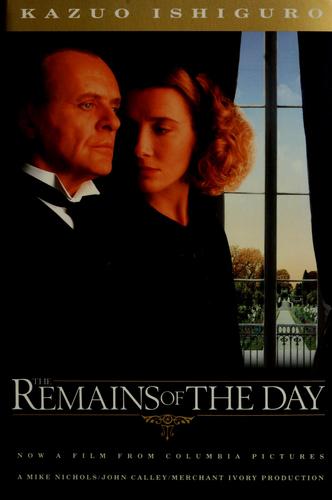
The Remains of the DayKazuo IshiguroThe standard-bearer for the beautiful-and-sad register in contemporary fiction. Stevens’s prose is beautiful in the specific sense that it is perfectly calibrated to suppress what it is managing, which means the reader perceives the suppressed thing with heightened clarity. The sadness arrives through the gap between what Stevens says and what he means, across hundreds of pages of accumulated small withheld truths, and the result is one of the most devastating reading experiences available in literary fiction — produced entirely through restraint. Nothing melodramatic happens. Everything that matters is handled so quietly that the reader is barely aware of the weight accumulating until it lands. Norwegian WoodHaruki MurakamiMurakami’s most emotionally direct novel is also his most controlled, and the combination produces the beautiful-and-sad register with unusual precision. Toru’s grief for Naoko is rendered through the specific texture of daily life — the music he listens to, the food he eats alone, the conversations that happen while the real subject cannot be named — and Murakami’s prose in this novel has none of the surrealist volatility of his other work. It is flat and attentive in the specific way that grief makes consciousness flat and attentive, and the Beatles song of the title is the most economical image of the register: a melody so familiar and so sad that hearing it is a minor grief in itself, and Murakami has written the novel equivalent. The Travelling Cat ChroniclesHiro ArikawaArikawa’s novel is the gentlest entry on this list and the one that most completely earns its ending. Satoru’s journey across Japan to find a new home for his cat Nana is organized around what Satoru is not saying, which the reader understands before any of the characters do, and the novel’s formal achievement is that it makes that understanding arrive gradually and completely without dramatic announcement. The prose is attentive to small things — seasonal detail, the specific behaviors of the cat, the particular warmth of old friendships — with the precision of someone who is paying close attention to what is present while it is still present. The most beautiful-and-sad novel on this list in the most literal sense: the beauty is in the attention, and the sadness is in the reason for it. HamnetMaggie O’FarrellO’Farrell’s prose is the most technically accomplished on this list — long, precise sentences that accumulate the physical detail of Elizabethan domestic life with the attention of a painter, so that the reader is fully inside a world before that world is put under pressure. The grief when it arrives has been prepared by everything that preceded it: the reader knows the boy through the specific texture of his presence before the absence begins, which means the loss is legible as exactly the loss it is rather than as generic grief. O’Farrell refuses to convert the suffering into meaning — there is no redemption, no learning, only the specific fact of what was lost and the specific way that loss changes the people who loved him. Beautiful in the way that only completely honest things can be. The God of Small ThingsArundhati RoyRoy’s prose is the most explicitly lyrical on this list — dense with image and rhythm, closer to poetry than to most literary fiction — and the beauty of it is inseparable from the sadness because both are produced by the same quality of attention to small things. The novel is structured around a catastrophe that the reader knows from near the beginning, and Roy uses the non-linear approach to show the world that existed before the catastrophe with such specificity that its loss is felt in the reading rather than described. The Kerala setting — the monsoon, the river, the specific social architecture of caste and class — is rendered with the precision of someone who understands that the small things are where life actually happens, and the novel’s title is its argument. Pedro ParamoJuan RulfoRulfo’s novella is the most formally extreme entry on this list and the one that most completely earns the description beautiful-and-sad in the literal sense: the prose is luminous and the world it describes is a village of the dead, still replaying their lives in fragments because they cannot release what they loved and lost. The beauty is in Rulfo’s images — dust, water, light through adobe walls — and the sadness is structural: the entire world of Comala is grief made permanent, a consciousness that cannot stop returning to what is gone. Garcia Marquez called it one of the two greatest novels in Spanish, and the quality of attention in its hundred pages is as dense and as precise as any novel ten times its length. Who This Is For
Readers who know the specific feeling they want — not comfort, not catharsis, but the experience of having been in the presence of something true about loss and having the prose be beautiful enough to sustain that presence without making it unbearable. Also readers who have found grief in fiction either too melodramatic or too protective, and who want books that handle loss the way good poetry handles it: precisely, without padding, with the understanding that the beauty is not in spite of the sadness but because of what the sadness is about. The literary fiction catalogue has more in this direction.
Frequently asked questions
Q: What makes a book beautifully sad rather than just depressing?
A: Precision and restraint. A depressing book amplifies its sadness — the stakes are high, the losses are operatic, the prose is working hard to produce feeling. A beautifully sad book renders loss exactly, with enough specificity that the reader recognizes something true rather than feeling something manufactured. The beauty is in the precision, not in the decoration, and the sadness is in the recognition rather than in the delivery.
Q: Which of these is the least sad?
A: The Travelling Cat Chronicles is the gentlest in emotional texture — the sadness is present but handled with such warmth that the reading experience is more bittersweet than painful. Norwegian Wood is the most accessible of the others. Pedro Paramo is the most formally unusual and requires the most patience but is the shortest.
Q: Is The God of Small Things difficult to read?
A: The prose is dense and benefits from reading slowly — Roy’s sentences reward attention in the way that poetry rewards attention. The non-linear structure means the reader holds several time frames simultaneously, which some readers find disorienting initially. Most readers find that the density becomes a pleasure once calibrated to it. It is less difficult than formally challenging.
Q: What should I read after Norwegian Wood if I want more Murakami in this register?
A: South of the Border, West of the Sun is Murakami’s other realist novel organized around grief and the persistence of longing, shorter and more compressed than Norwegian Wood. The Wind-Up Bird Chronicle is considerably longer and more surreal but shares Norwegian Wood’s quality of sustained melancholy attention. Readers who want the restrained register specifically should stay with the two realist novels.
Not sure which of these is right for you specifically? The Pagesmith quiz matches you to books based on your mood, pacing preference, and reading goals, not bestseller lists. Takes two minutes.