Books Like All the Light We Cannot See for WWII Fiction Readers
All the Light We Cannot See earns its emotional weight through structural precision -- converging timelines, two ordinary people caught in extraordinary circumstances, one specific place rendered with care. These books share WWII fiction told through intimate individual experience.
May 2026 · 7 min read · The Pagesmith
Most WWII fiction is told at one of two distances: the strategic panorama of generals and armies, or the individual story of a soldier in combat. All the Light We Cannot See occupies a different register entirely. Anthony Doerr is not interested in the war as military history but as a condition — a set of circumstances that arrives in the lives of two very ordinary young people, a blind French girl and a German orphan, and forces them to navigate the impossible question of what it means to be a decent person inside a system designed to make decency structurally impossible. The craft of the novel is in how Doerr alternates between these two stories across time, letting the reader understand the convergence before it arrives, so that the final movement carries the full weight of everything that preceded it. The books here share that approach: WWII told through the specific texture of individual lives rather than through military events, with the structural precision that distinguishes serious historical fiction from dramatized history.
What Sets Intimate WWII Fiction Apart
The distinction between WWII fiction as history and WWII fiction as literature comes down to what the war is being used to examine. Military history examines decisions, logistics, and outcomes. Literary fiction uses the war to ask what it does to ordinary people — what choices they face, what moral framework they develop to survive, and what stays with them after. The books here are all doing the latter, and several of them share Doerr’s specific interest in the experience of non-combatants: civilians, resisters, occupied people, women. The war in these novels is not the subject but the pressure system that makes everything else visible.
The war in the best WWII literary fiction is not about battles. It is about what happens to the moral lives of ordinary people when the systems that normally structure those lives have been replaced by something that requires different choices entirely.
The Books
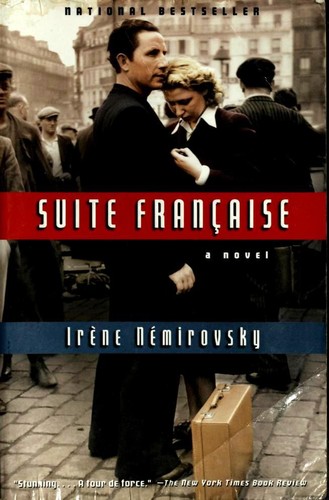
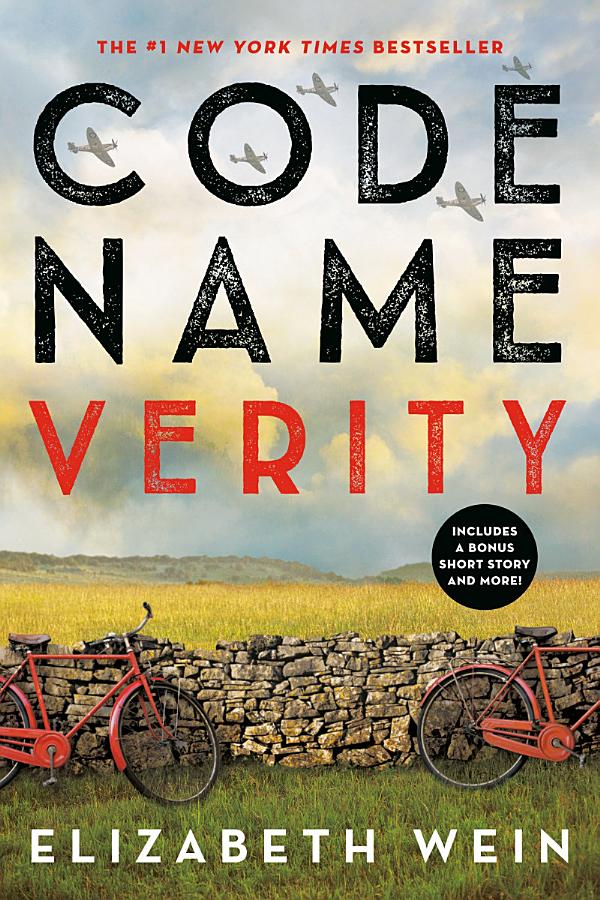
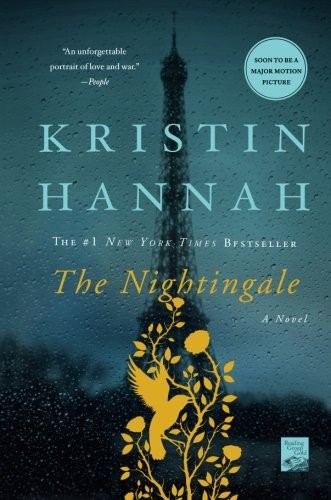
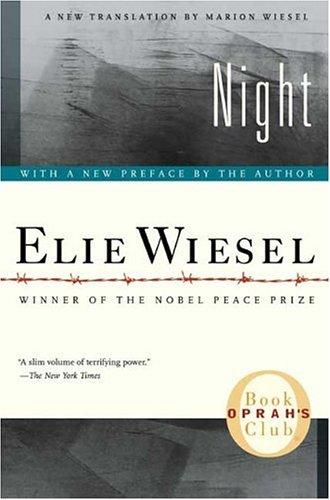
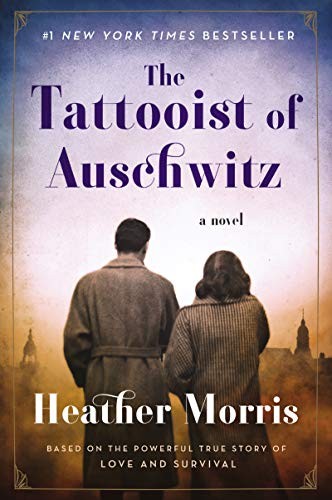
Suite FrancaiseIrene NemirovskyThe most formally unique book on this list, because it was written during the Occupation itself rather than in retrospect. Nemirovsky died at Auschwitz in 1942, and the manuscript was discovered sixty years later among her papers. She intended a five-part novel; two parts survive. The texture of the Occupation at street level — the flight from Paris, the accommodation between villagers and German soldiers, the social negotiations of daily life under an occupying force — is rendered with the intimacy of someone living inside it, which no amount of subsequent research can fully replicate. The context is inseparable from the reading experience, but the novel is extraordinary on its own terms. Code Name VerityElizabeth WeinThe most structurally inventive entry and the one whose formal architecture most closely resembles Doerr’s. Julie is writing her confession under Nazi interrogation, and the reader gradually understands that the confession is not what it appears to be. Wein uses two narrative streams — the confession and the second narrator who corrects and completes it — to produce a convergence that Doerr fans will recognize: the reader understands the full picture before either narrator does, and the weight of that understanding arrives with the full force of the relationship that has been built. The friendship between the two women is the emotional center, and it is rendered with the same precision Doerr brings to Werner and Marie-Laure. The NightingaleKristin HannahHannah’s novel is the most emotionally direct entry on this list and the one that most completely centers the experience of civilian women under Occupation. Two sisters — one who accommodates the German officer billeted in her home, one who joins the Resistance — make incompatible choices under the same impossible circumstances, and Hannah renders both with enough empathy that neither woman is simply right. The Loire Valley is as precisely rendered as Doerr’s Saint-Malo, and the novel shares his structural confidence: alternating perspectives converging on a frame narrative whose significance only becomes clear at the end. The most accessible book here and the one most likely to produce the same response as All the Light. The Alice NetworkKate QuinnQuinn uses the same dual-timeline structure as Doerr: a 1947 American girl searching for her missing cousin, and the story of a real WWI female spy network that becomes relevant to that search. The two timelines comment on each other across thirty years in ways that make both more legible than either could be alone, which is Doerr’s structural method applied to a slightly different war and a different kind of heroism. Quinn’s prose is faster and more thriller-structured than Doerr’s, which makes this the right recommendation for readers who want the same emotional investment and historical specificity at a quicker pace. The research is meticulous and the female protagonists are fully realized. NightElie WieselThe necessary shift in register: where Doerr and Quinn use the war as the setting for structural and emotional craft, Wiesel provides the testimony that makes the craft feel insufficient and the event itself feel fully present. Night is not a novel in the conventional sense — it is memoir, written in a prose stripped to the minimum required to say what happened, and its brevity (under 150 pages) is a formal choice about what language can be asked to do in the face of the Holocaust. Reading All the Light We Cannot See alongside Night clarifies what fiction can accomplish — the emotional and structural work of investing readers in individual lives — and what it cannot replace: the weight of direct witness. The Tattooist of AuschwitzHeather MorrisMorris’s novel is based on the testimony of Lale Sokolov, who tattooed the numbers on prisoners at Auschwitz and who fell in love with one of them. The love story at the center of the novel serves the same structural function as Werner and Marie-Laure’s convergence in All the Light — it gives the reader an emotional anchor through which to experience circumstances that would otherwise be overwhelming in their scale. The novel has been criticized for historical imprecision, and readers who want documentary accuracy should read it alongside Night or primary sources. As a narrative about how human connection survives in the most dehumanizing conditions, it delivers what All the Light readers are looking for. Who This Is For
Readers who finished All the Light We Cannot See understanding why Doerr won the Pulitzer — the craft, the convergence, the specific weight of the final pages — and who want WWII fiction that brings the same level of structural and emotional care to the civilian experience of the war. The historical fiction catalogue has more in this territory.
Frequently Asked Questions
Q: What is the best WWII novel for readers new to the genre?
A: The Nightingale is the most accessible entry point — propulsive, emotionally direct, and centered on characters whose choices are immediately comprehensible. All the Light We Cannot See rewards slightly more patient readers. Night is essential reading on any list of serious WWII literature and is short enough to read alongside any of these novels.
Q: Is The Tattooist of Auschwitz historically accurate?
A: Not entirely. The novel is based on Lale Sokolov’s testimony but some details have been disputed by historians and Auschwitz scholars. It should be read as a narrative based on a survivor’s account rather than as documentary fiction. The emotional reality of the love story is genuine; the specific historical details should be approached with awareness of this caveat.
Q: What is Suite Francaise and why was it published so late?
A: Irene Nemirovsky was a Ukrainian-born French novelist who began writing Suite Francaise in 1941 during the German Occupation of France. She was arrested and deported to Auschwitz in 1942, where she died. Her daughters preserved the manuscript notebook but believed for decades that it contained only a journal. When they finally read it in the 1990s and realized it was a novel, it was edited and published in 2004. The novel won the Prix Renaudot posthumously.
Q: What should I read after Code Name Verity?
A: Rose Under Fire is Elizabeth Wein’s companion novel, following a character from Code Name Verity into a women’s concentration camp. It is darker and in some ways more harrowing. Wein has said it can be read independently but rewards reading after Code Name Verity.
Not sure which of these is right for you specifically? The Pagesmith quiz matches you to books based on your mood, pacing preference, and reading goals, not bestseller lists. Takes two minutes.